Having an original idea gives businesses a first-mover advantage, allowing them to beat competitors to the punch. However, innovation that appeals to a narrow audience risks not attracting enough customers.
Complicating matters, customers’ dining preferences are changing — for example, from low-fat products to more recent trends of low-carb diets and plant-based proteins. This can mean swift sales declines for restaurants.
As a vegetarian of more than 20 years, I understand why many plant-focused fast-food chains typically struggle. I don’t crave food that tastes like meat, and I would only eat at such a chain when traveling or when I don’t have time to prepare my own food.
My experience echoes expert opinions shared with The Food Institute. Specifically, plant-based restaurants that try to mimic the McDonald’s and Burger Kings of the world may not realize that true vegetarians and vegans are not interested in meat-like menus, while those who eat at burger chains have little interest in what is seen as a healthier alternative.
“Healthy fast food has always been a puzzle that very few, if any, brands have solved in the United States,” retail expert and TheStreet Co-Editor-in-Chief Daniel Kline recently pointed out.
Now, another chain catering to vegetarians has been forced to close its last freestanding drive-thru location.
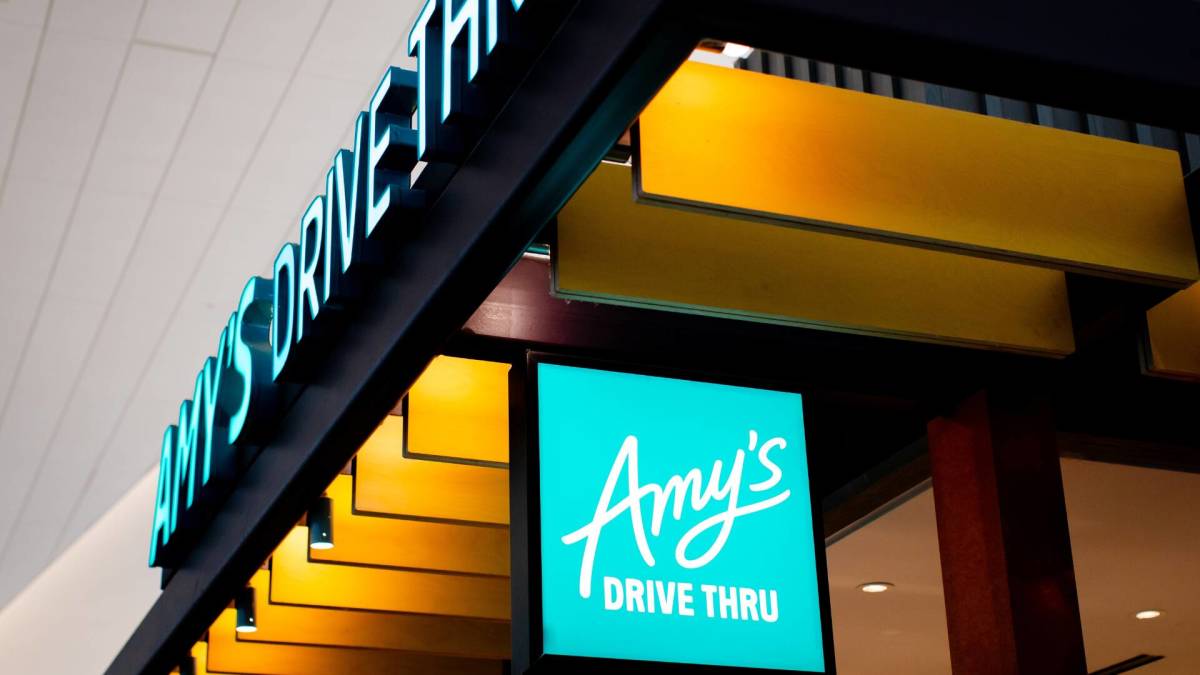
Amy’s Drive-Thru closes last freestanding location
For more than 30 years, Amy’s Kitchen has been popular for its ready-made vegetarian meals sold at grocery stores. In 2015, the owners thought it was the right time to expand and enter the growing fast-food scene, so they opened their first brick-and-mortar restaurant right off Highway 101 in Rohnert Park, Calif.
On March 8, Amy’s Drive-Thru closed its first and last standalone drive-thru location, reported Penn Live.
“After 10 incredible years, we’ve made the difficult decision to close Amy’s Drive Thru in Rohnert Park. Our last day will be March 8, 2026,” the restaurant shared on its Instagram page.
In 2015 when it opened, the chain was a pioneer in the vegetarian space. “We weren’t even sure what any of this would look like, but we were a bit of a national sensation. There was a buzzy piece to us being the first of our kind in the fast food space,” Schiefer said.
The initial popularity was good, no doubt, but it also made the team realize that they had a lot of work to do on the operations side. In 2017, the “operational efficiency stage” became a priority and the company created an operations team with independence from the company’s retail side, which isn’t the case for other parts of the business, like food safety or finance.
“There was a buzzy piece to us being the first of our kind in the fast-food space,” Schiefer said, adding that it differentiated itself as an all-vegetarian, organic concept that sold items like burgers and pizzas, ‘not just sprouts and hummus,’” President Paul Schiefer told Nation’s Restaurant News during a 2023 interview.
Before Schiefer’s appointment in 2023, Amy’s was planning to expand from four units to 25-30 in over the five years. The newly appointed president, however, changed the plan, with the goal of concentrating on fundamentals, reported Nation’s Restaurant News.
bluestork/Shutterstock
Why are vegetarian restaurants struggling? From hype to reality
Successfully running a vegetarian or vegan fast-food chain remains a challenge, because despite the number of vegans growing every day, they still account for a tiny fraction (about 1%-2%) of the world’s population, according to data from World Animal Foundation.
Moreover, statistics from Psychology Today show that about 84% of vegetarians and vegans return to eating meat, suggesting that a plant-based diet might be too hard for many people to maintain throughout their entire lives.
More Restaurants
- Chipotle’s new consumer strategy raises eyebrows
- Burger King revives iconic kids’ meal toys after 22 years
- Walmart surprises shoppers with bold new restaurant offering
Add to that a business climate in which even standard meat-serving restaurants are currently struggling, and there’s a perfectly solid explanation for why many plant-based chains have closed or gone bankrupt over the last few years.
Industry data suggest that nine in 10 cite food, labor, insurance, energy, and swipe fees as significant challenges, according to the National Restaurant Association.
For example, I previously explained why even traditional Italian restaurants are now struggling as they face consumer trade-downs, volatile ingredient prices, and shifting consumer preferences. Read more about it in my article Bankrupt national Italian restaurant chain closes more locations.
Key reasons why vegetarian restaurants are struggling:
- Overall industry challenges: The current economic context is challenging for every restaurant. In fact, 42% of operators reported that their restaurant was not profitable in 2025, according to data from the National Restaurant Association.
- High ingredient and labor costs: Specialized plant-based proteins and fresh, organic produce often carry a higher price tag than conventional wholesale meat. Additionally, producing vegan cheeses and proteins requires more intensive labor, resulting in more expenses, according to 2025 data from Alice and Friend’s Vegan Kitchen.
- Ultra-processed fatigue: Consumers are increasingly moving away from heavily engineered “fake meats” in favor of whole foods. “Growth [is] fueled by health, not hype. Clean-label, minimally processed whole foods are winning, while ultra-processed plant-based products are losing consumer trust. Protein interest in meat is growing 3x faster than plant-based alternatives, pushing brands toward authenticity over imitation,” according to Meati.
- Mainstream competition: McDonald’s experiment with McPlant failed in the U.S. due to low demand. It also faced competition from chains such as Chipotle and Taco Bell, whose menus are better suited to satisfy both vegetarians and meat eaters.
Chris Costagli, a food thought leader at NIQ, commented on plant-based brands’ challenges, arguing that customers scrutinized their labels to discover unfamiliar ingredients, added sugars, or high sodium content, reported The Associated Press.
Moreover, U.S. retail sales of plant-based meat have dropped 26% over the last two years, according to data from NIQ.
“There’s a lot of fillers and gums and texturizers and things that give those products a more familiar feel,” Costagli said. “I think as people have been paying closer and closer attention to what they’re actually ingesting, it’s causing some products to stumble.”
Popular vegan and vegetarian chains that closed or downsized:
- Slutty Vegan: Shrunk from 14 locations to only a handful, as its founder filed for Chapter 11 Bankruptcy in March 2026, according to AL.
- Neta Burger: The vegan burger chain backed by Leonardo DiCaprio and Formula 1 icon Lewis Hamilton closed all its U.S. locations in May.
- Planta: This plant-based food chain closed half its locations in September after a Chapter 11 bankruptcy filing.
- Kevin Hart’s Hart House vegan fast food: Closed all Los-Angeles-area restaurants in September 2024, just two years after opening, according to Eater LA.
- Seabirds Kitchen: A vegan restaurant in Long Beach closed in September 2024 after seven years, reported Eater LA.
- Veggie Grill: After closing 40% of its locations (12 stores) in late 2023, it was acquired in January 2024 to save it from bankruptcy, reported Food Institute.
- Giving Tree Cafe: The restaurant, which served an entirely plant-based menu on Seventh Street near downtown Phoenix, closed in late 2024 after five years of service, according to Phoenix New Times.
The beginning and the next chapter for Amy’s Kitchen
It all started in 1987, when Rachel and Andy Berliner decided to found the company to create their own organic, vegetarian meals after failing to find high-quality, ready-made options while Rachel was pregnant on bed rest.
The next year, the company outgrew its home kitchen and opened its first full-sized facility in Sonoma County with eight employees, according to Amy’s.
“From day one, our mission was simple: to serve delicious, organic food that everyone could enjoy. As the first organic, vegetarian drive thru in the nation, we’ve shared countless meals, smiles, and memories with you — and that’s something we’ll always be proud of,” reads the company’s farewell message on Instagram.
In 2020, it became one of the first fast-food chains to receive B Corp certification, verifying its high standards of social and environmental performance, reported Food Business News.
A number of longtime customers were sad to hear the news about the closure, sharing their feelings below the Instagram closure post.
“Drove all the way over to have your food one last time today, almost started crying,” user allysonsadventures wrote. “Was so excited when you opened and have made the drive many times throughout the years. So incredibly sad about this. Your food has always been fantastic!”
Saddened customers will be pleased to know that the company will continue to produce its Amy’s Kitchen’s organic frozen foods that can be found in 43,000 grocery stores across the country and its restaurant inside the San Francisco International Airport continues to operate.
“This chapter was defined by innovation and connection, and while it’s bittersweet to say goodbye, we’re proud of what it represented. As Amy’s approaches 40 years, we’ll continue to feed millions of people through our great products found in grocery stores nationwide,” Schiefer wrote in a statement emailed to Nation’s Restaurant News.
Related: Wendy’s targets new customer group amid mass U.S. store closures
