Some of the loudest endorsements in investing are the trades you never make.
Wall Street has spent the better part of a decade telling Warren Buffett that his stake in a 138-year-old Atlanta beverage company was a relic of a different consumer era. Sugar taxes would gut volumes. GLP-1 drugs would crush soda demand. Tariffs would squeeze margins. Younger consumers, the argument went, simply were not going to drink the stuff the way their parents did.
Buffett, characteristically, did nothing.
Berkshire Hathaway’s 400 million-share position in Coca-Cola has not budged since 1994. Not one share sold across financial crises, recessions, the lingering shadow of New Coke, or the Ozempic era.
On the morning of April 28, that patience looked less like stubbornness and more like a thesis with receipts. Coca-Cola posted first-quarter 2026 results that beat on every line that matters, raised full-year guidance, and the stock did exactly what dividend kings are supposed to do when the music turns. It moved up.
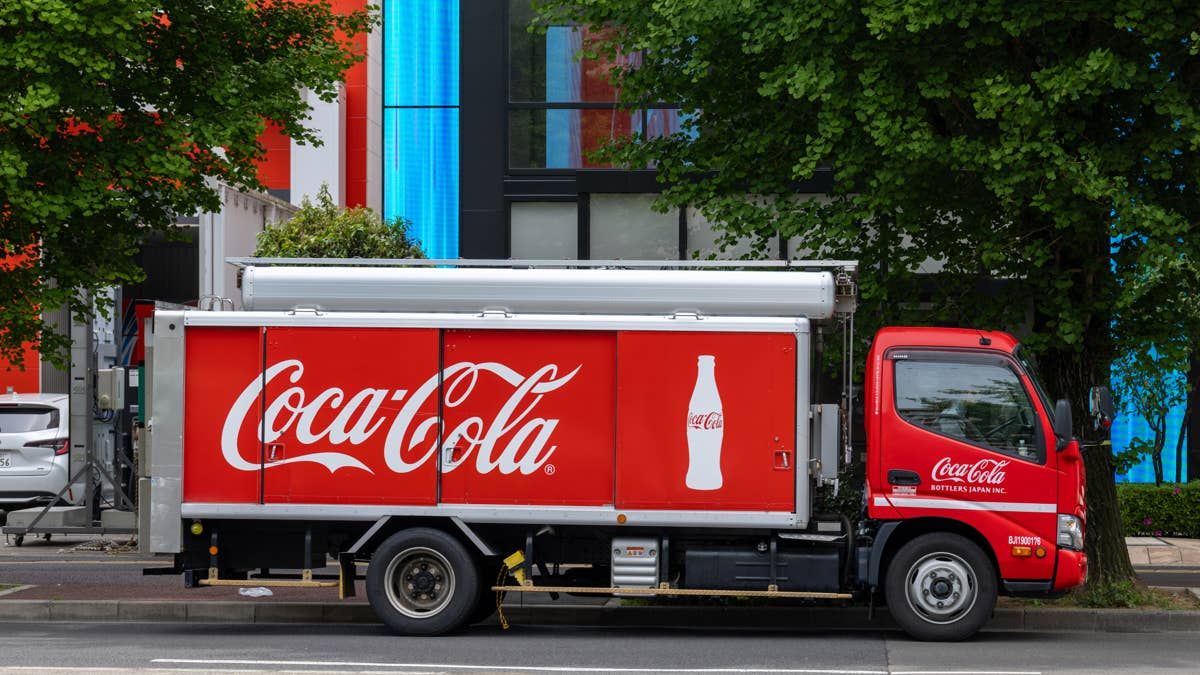
Photo by winhorse on Getty Images
Why Coca-Cola’s Q1 2026 numbers vindicate the Buffett trade
The headline figures were straightforward. The composition is what mattered.
Coca-Cola reported adjusted earnings of “86 cents per share,” beating the 81-cent consensus, while revenue of “$12.47 billion” cleared the $12.24 billion forecast, according to CNBC.
Related: Coca-Cola is expanding Fairlife production as demand grows
What I look for in a defensive name is whether the beat is real growth or accounting noise. In my analysis of this release, the answer is real growth.
Net revenue grew 12% year over year. Organic revenue, which strips out currency moves, acquisitions, and divestitures, rose 10%, fueled by an 8% jump in concentrate sales and 2% growth in price/mix, per Coca-Cola’s investor release.
That is volume showing up next to pricing power, which is the exact combination bulls on the stock have been demanding for two years.
Operating margin came in at 35%, up from 32.9% a year earlier, according to the company. That single line is what makes the dividend Buffett collects every quarter feel structurally durable rather than cosmetically defended.
Coca-Cola also raised its full-year comparable EPS growth target to 8% to 9%, up from 7% to 8%, off a $3.00 base from 2025, per the release. The organic revenue range stays at 4% to 5%.
More Retail Stocks:
- You won’t believe what Coca-Cola just did with its coffee brand
- Costco reveals a new approach that could reshape the chain
- Shoppers furious at grocery chain’s new anti‑theft rule
How a 38-year-old bet keeps printing for Berkshire Hathaway
The math behind the Coke trade is easier to feel than to read on a page.
Berkshire built its entire 400 million-share stake between 1988 and 1994 for roughly $1.3 billion, an average cost basis of $3.25 per share, according to 24/7 Wall Street. The position is worth north of $30 billion at April 28’s price.
Coca-Cola sends Berkshire “$816 million every year in dividends” without Buffett having to lift a finger, Yahoo Finance reported. That works out to a yield on cost above 60%. Translation: every dollar Berkshire put into Coke in 1988 sends back roughly 60 cents in dividend income each year, before the stock has even moved.
This quarter feeds that machine directly. Higher EPS funds higher payouts, and Coca-Cola has now raised its dividend for 63 consecutive years, according to 24/7 Wall Street. The current quarterly payout sits at $0.53 per share, up from $0.16 in 1999.
When I ran the cost-basis math on a hypothetical $10,000 invested alongside Buffett at the average $3.25 entry, the picture is almost cartoonish.
A $10,000 1988 Coca-Cola bet, by the numbers
- Original shares purchased: roughly 3,076 at $3.25 average.
- Current annual dividend income: about $6,275 at the $2.04 per share rate.
- Yield on cost: above 60%.
Buffett summed up the unsexy beauty of it himself in his 2022 shareholder letter, paraphrased here: the cash dividend Berkshire received from Coke was $75 million in 1994 and $704 million by 2022, growing every year as reliably as birthdays.
What Henrique Braun’s first quarter as Coca-Cola CEO actually proved
This was the first quarterly print under new chief executive Henrique Braun, and the message to investors was that the playbook is not changing.
“We’ve had a strong start to the year,” Braun said in the company’s release.
What stood out to me was the geographic mix. Global unit case volume rose 3%, led by gains in China, the U.S., and India. Coca-Cola Zero Sugar grew 13% globally. That is not a story about price hikes papering over softness. That is real consumers, in the world’s three biggest growth corridors, still picking up the red can.
Braun acknowledged the rougher edges on the call, noting that “many consumers remained resilient” while others stayed under pressure from inflation and Middle East tensions, per CNBC.
Wall Street rewarded the print anyway. Shares climbed more than 6% to roughly $80 in Tuesday, April 28 trading, with the average analyst price target sitting at “$83.67,” per pre-print data flagged by TipRanks and reported by Invezz.
What this means for your portfolio, even if you are not Warren Buffett
Most readers do not have $1.3 billion to deploy and 38 years to wait. The practical takeaway holds anyway.
When defensive consumer staples like Coca-Cola raise guidance into a slowing macro backdrop, the stock tends to act like a bond proxy with optionality attached. You get the roughly 2.8% dividend yield, the 63-year payout streak, and a CEO who just told the Street he is not blinking on the model.
The Buffett lesson here is older than this earnings report, and it does not require copying his portfolio dollar for dollar. It is the boring version of compounding. Buy a business with pricing power, hold it long enough that the dividend covers your cost basis several times over, and let time do what trading cannot.
Q1 2026 was not a transformative quarter for Coca-Cola. It was a quarter that reminded the market why Buffett refuses to print a sell ticket on the line item.
The next test arrives with summer volume trends and the Coca-Cola Beverages Africa divestiture, which management has flagged as a 4-point drag on comparable revenue when it closes in the second half of 2026.
If those two pieces land where Braun expects, the dividend check Berkshire cashes next quarter will be slightly larger than the last one.
Birthdays, as Buffett once put it.
Related: How much to invest in Coca-Cola for $1,000 annual dividends in 2026
