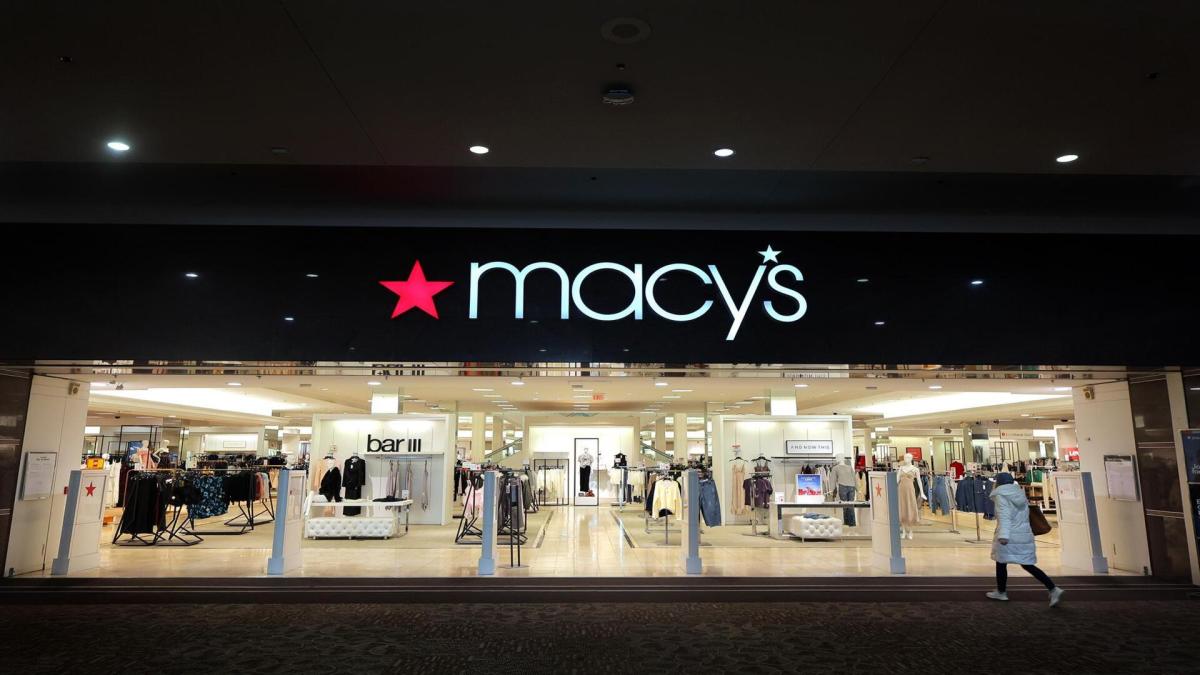
Macy’s has spent the better part of a decade trying to prove it still has a place in modern retail. Now, a new AI chatbot may be the clearest sign yet that the turnaround is real.
The company recently launched “Ask Macy’s,” a shopping assistant powered by Google’s Gemini AI.
Before the full rollout, it was quietly tested with about half of the website’s visitors. The results were striking. Shoppers who engaged with the chatbot spent roughly 4.75 times as much as those who didn’t, according to Bloomberg.
It indicates a structural change in how customers shop and could be a key driver for Macy’s future dividend growth.
What Macy’s dividend investors should know
For income-focused investors, Macy’s (M) has quietly been doing the right things with its cash. Over the last five years, despite slowing growth, Macy’s has raised its quarterly dividend to $0.192 per share in 2026 from $0.15 per share in 2021.
Currently, Macy’s offers shareholders an attractive forward yield of 4.3%.
Macy’s annual dividend expense is about $200 million. Comparatively, Macy’s is forecast to report free cash flow of more than $700 million in fiscal 2027 (ending in January), indicating a payout ratio of less than 30%.
The FCF is projected to surpass $900 million by fiscal 2029, which should support consistent dividend hikes.
Here’s a snapshot of Macy’s key dividend metrics:
- Dividend per share (FY2027E): $0.75
- Shareholder returns in FY2026:$448 million total, including $197 million in dividends and $251 million in buybacks
- Dividend payout growth since 2021:Up 27% since the quarterly dividend was reinstated
- Share buyback authorization remaining: Approximately $1.1 billion
- Balance sheet: No material long-term debt maturities until 2030; leverage ratio below 2.5x target
The free cash flow picture is what makes this dividend stock credible. Generating more than $700 million in free cash flow while funding store reinvestments, the AI rollout, and shareholder returns is not something a struggling retailer does.
“For the year, operating cash flow was $1.4 billion versus $1.3 billion last year, and free cash flow was $797 million versus $679 million last year,” said Macy’s CFO Thomas Edwards.
What the Macy’s AI bot does
The AI tool isn’t just a search bar dressed up in new clothes. Its most popular features include a “complete the look” suggestion engine that recommends accessories to pair with outfits and a virtual try-on function.
- Customers can also use the try-on feature in stores, which is useful when the fitting room line is long.
- Macy’s Chief Customer and Digital Officer Max Magni told Bloomberg that users tend to shop with purpose.
- Someone looking for a specific outfit for an event, rather than just browsing, is already primed to buy. The bot meets them there.
Magni also suspects the tool is drawing in younger shoppers: a demographic Macy’s has been actively courting.
Boston Globe/ Getty Images
Macy’s broader turnaround story
The AI launch doesn’t exist in a vacuum. It sits atop a business that has consistently improved.
In fiscal 2026, Macy’s posted adjusted diluted EPS of $2.32, well above the $2.00 to $2.20 guidance range.
Q4 alone delivered EPS of $1.67, beating the high end of guidance by $0.12.
Comparable sales grew 1.8% in the fourth quarter. That marked the third consecutive quarter of positive comparable sales growth across the go-forward business: a milestone the company has been working toward for years.
More on dividend stocks:
- Energy Transfer stands out as high-yield dividend stock
- Is Realty Income the best monthly dividend stock to buy now
- Verizon remains a top dividend stock for passive income
Bloomingdale’s led the charge with a standout 9.9% comparable sales gain in Q4, its best holiday result on record. Even Bluemercury, the smallest nameplate, posted 1.3% growth.
CEO Tony Spring credited the Reimagine store program, which has now been rolled out to 200 locations — roughly 60% of Macy’s go-forward store base, covering about 75% of go-forward store sales.
Those stores have posted positive comparable sales in seven of the past eight quarters.
The digital side is healthy, too. Online now accounts for roughly one-third of annual sales and continues to grow, with modernized site design reinforcing what’s working in stores.
The road ahead for Macy’s
Management is guiding fiscal 2027 net sales to $21.4 billion to $21.65 billion, with comparable sales down 0.5% to up 0.5%.
Adjusted diluted EPS is expected to be $1.90 to $2.10 — down from $2.15 in 2026, largely due to a $0.10 to $0.20 tariff headwind.
That’s a conservative guide. Macy’s has beaten expectations in all four quarters of fiscal 2026.
Out of the eight analysts covering Macy’s stock, one recommends “buy,” six recommend “hold,” and one recommends “sell.”
The average Macy’s stock price target is $18.33, indicating an upside potential of 4% from current levels.
With the AI chatbot now fully live, the Reimagine 200 program at scale, and Bloomingdale’s running on all cylinders, the setup for the year is better than the numbers on paper suggest.
For dividend stock investors who’ve been waiting for a real reason to look at Macy’s again, the “Ask Macy’s” chatbot might be exactly that.
Related: Is Macy’s dividend safe after massive store closures?
