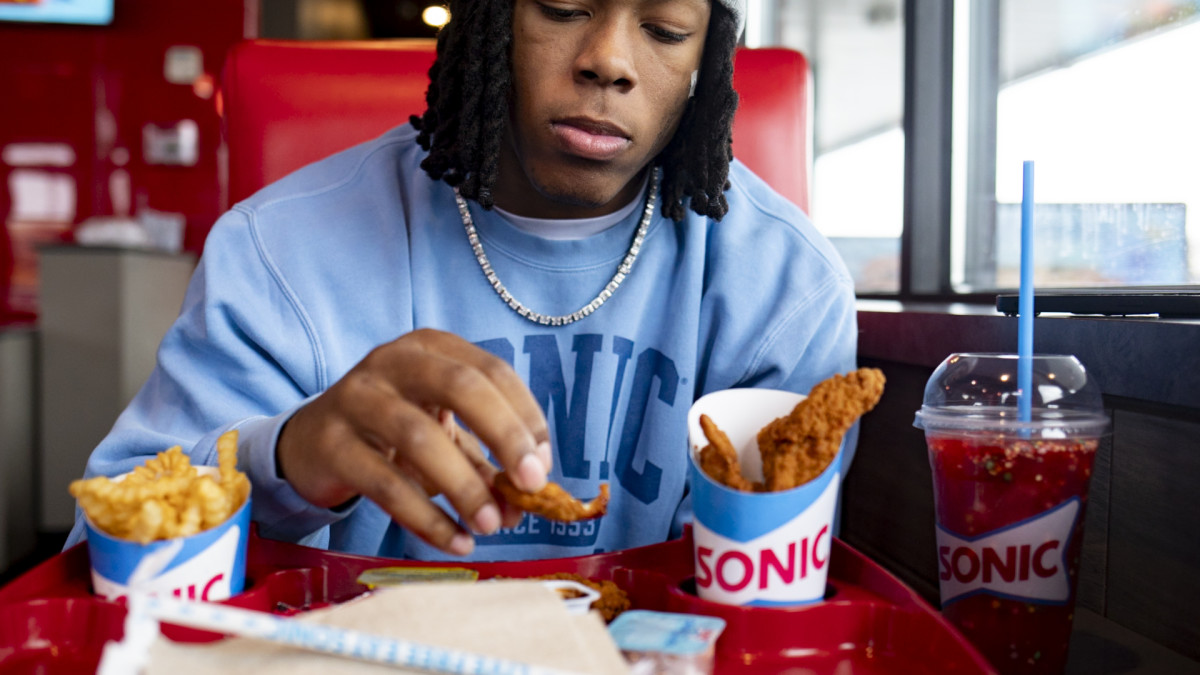
There are few drive-in restaurants left today that reflect the authentic 1950s experience.
From iconic lots with neon lights to curbside ordering and carhops on roller skates delivering food directly to customers’ vehicles, the traditional American drive-in model has gradually faded as consumer habits and restaurant formats have evolved.
Despite this shift, Sonic Drive-In has remained committed to preserving the classic drive-in experience while expanding into a modern national brand.
Founded in 1953 as a small root beer stand called Top Hat in Shawnee, Oklahoma, the company rebranded to Sonic in 1959. Today, the chain operates thousands of locations nationwide, with roller-skating carhops remaining a signature element in its nostalgic identity, and serving its popular classic American burgers, Chili Cheese Coneys, and customizable drinks.
Now, Sonic is undergoing a major operational change across dozens of locations that could reshape the future of its business.
Franchise operator acquires 78 Sonic restaurants
Restaurant franchise group KBP Brands has acquired 78 Sonic restaurants across Ohio, Kentucky, North Carolina, Tennessee, and Virginia, which were previously corporate-owned, according to the press release. The financial terms of the transaction were not disclosed.
This deal marks KBP Brands’ second Sonic acquisition in less than two years, making it the chain’s fourth-largest franchisee with 164 restaurants out of approximately 3,400 locations in 47 states.
“We’ve had a successful five-year partnership with Inspire Brands and have seen strong results from our initial Sonic purchase,” said KBP Brands CEO Mike Kulp in the press release. “We look forward to expanding that with a larger footprint and additional operational efficiencies.”
Sonic is part of the Inspire Brands family of restaurants, which also owns Arby’s, Baskin-Robbins, Buffalo Wild Wings, Dunkin’, and Jimmy John’s. Collectively, Inspire Brands oversees more than 33,000 restaurants across its brands.
KBP Brands is one of the largest franchise groups in the U.S., owning and operating over 1,100 KFC, Taco Bell, Arby’s, and Sonic locations across 32 states. The company generates approximately $1.5 billion in annual sales and has grown consistently for two decades.
Emily Elconin/Getty Images
Sonic’s strategic shift toward franchise ownership
This latest acquisition is part of a broader restaurant industry strategy of transitioning company-owned locations to franchise-operated ones.
Sonic’s franchise store count declined by about 87 units between 2022 and 2024, bringing it to 3,144 restaurants, according to Sonic’s franchise disclosure document.
By transferring corporate locations to experienced franchisees, the company can continue expanding its market presence while reducing capital investment and operational risk.
Franchising allows independent business owners to operate under an established brand, benefiting from existing systems, marketing, and customer recognition. For franchisors, the model accelerates growth and improved operational efficiency.
More Franchising Business News:
- Chick-fil-A is making a major change to 425 restaurants nationwide
- 62-year-old pizza buffet chain gives up control in major deal
- Burger King makes major move fans will love after franchise bankruptcies
- 65-year-old fast-food chain sues major operator after closures
This structure can be especially valuable in the high-risk restaurant industry and amid an uncertain economy.
According to the U.S. Bureau of Labor Statistics, about 17% of new restaurants close within their first year. Long-term restaurants have an even higher chance of shutting down, with around half closing within five years and only 34.6% surviving beyond a decade, according to Oysterlink.
The challenges behind franchise growth
While franchising offers multiple advantages, it also introduces operational risks.
As more independent operators manage locations under a single brand, maintaining consistent quality and customer experience becomes more complicated. Poor execution at individual restaurants can damage brand reputation, sometimes forever.
Industry consultants at FMS Franchise note that consistency is one of the biggest challenges for growing franchise systems.
“The essence of franchising lies in offering a consistent brand experience across all locations, a challenge that becomes more complex as the number of franchise units grows,” the firm states. “This consistency is vital for sustaining brand integrity and requires a well-orchestrated franchise development plan.”
What the KPB acquisition means for Sonic
The expanded partnership with KBP Brands points to a continued shift toward Sonic’s franchising efforts to boost growth. If executed effectively, the strategy could strengthen the chain’s operational performance while allowing brand development and long-term expansion.
The shift aligns with a broader industry move toward asset-light operating models.
“Becoming more asset light is, in many cases, the right choice — especially since smart-control techniques can offset the associated trade-offs,” said Boston Consulting Group Industry Consultants Nicolas Kachaner and Adam Whybrew.
“In doing so, companies can improve their returns, become more agile, capitalize on the scale and experience of their suppliers, and redeploy their operations more quickly — advantages that are increasingly important in today’s fast-changing global economy.”
Related: After bankruptcy, iconic seafood chain closing more restaurants
