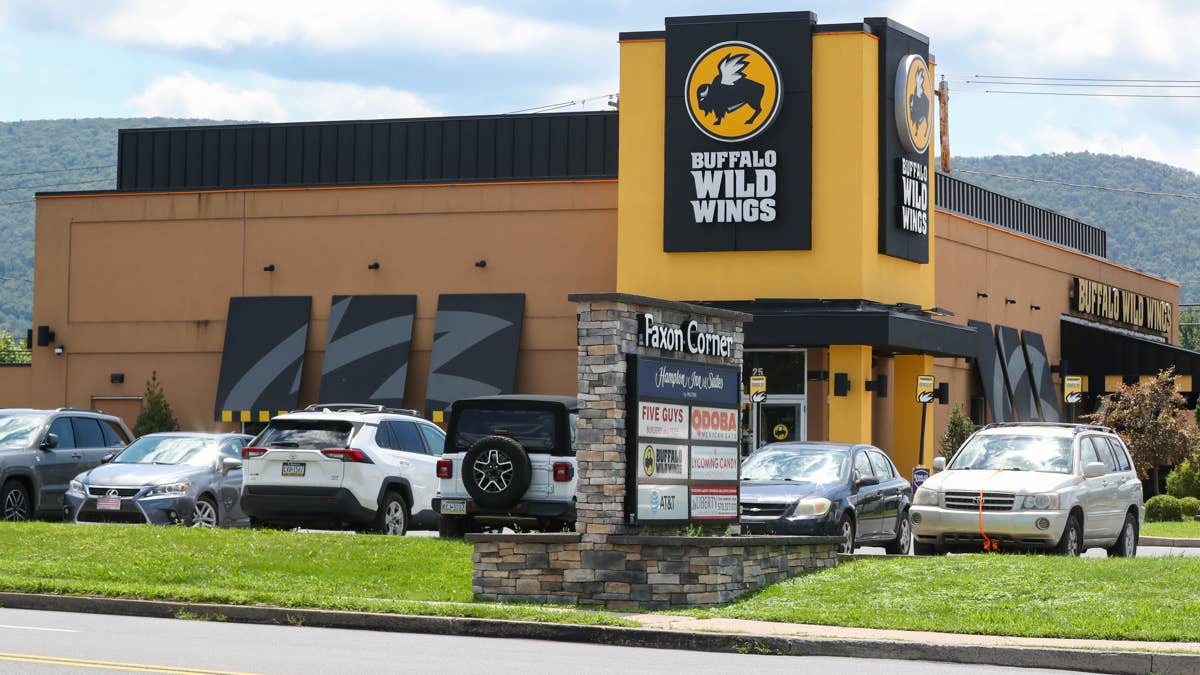
Buffalo Wild Wings has long been part of game day traditions nationwide, where TVs line the walls, crowds gather for major matchups, and wings often anchor the table.
But in this major college town, that familiar scene is nearing its end. After more than two decades in one of the city’s busiest districts, a Buffalo Wild Wings location is preparing to close, marking the end of a long-standing presence in the community.
The closure may appear like a single, local decision. However, it comes as similar shutdowns are emerging across the country, raising questions about whether something larger is unfolding within the sports bar chain’s footprint.
Buffalo Wild Wings confirms closure of 20-year-old location
Buffalo Wild Wings is closing its downtown Ann Arbor, Michigan, location at 205 South State Street, ending a more than 20-year run in the community. The restaurant’s final day of service will be May 3, 2026.
Manager Paul Creely confirmed the decision, citing broader economic pressure affecting the restaurant industry.
“We understand that people don’t have as much money to come out and eat and it’s just the nature of the beast,” Creely said in a statement reported by MLive.
Following the closure, only one remaining Buffalo Wild Wings location will continue to serve the Ann Arbor area, at 3150 Boardwalk Drive, approximately three miles away.
The company has not publicly confirmed a specific reason for the shutdown. However, local community members say rising rent costs may have contributed to the decision, according to the Ann Arbor Community group, but those claims remain unconfirmed.
A pattern of recent closures for Buffalo Wild Wings
This Ann Arbor closure is not an isolated case. Several Buffalo Wild Wings locations have shut down across the U.S. in early 2026, including:
- McHenry, Illinois: Closed April 2026, Shawn Local reported
- Morris, Illinois: Closed March 2026 after 10 years, WCJNews shared
- Crystal City, Virginia: Closed February 2026 after 15 years, according to ARLnow
- Hicksville, New York: Closed January 2026 due to mall redevelopment, Greater Long Island confirmed
While each closure has its own circumstances, ranging from lease changes to redevelopment, together they highlight ongoing pressure across the casual dining sector.
Paul Weaver/SOPA Images/LightRocket via Getty Images
Buffalo Wild Wings’ history and industry position
Founded in 1982 in Columbus, Ohio, Buffalo Wild Wings has grown into the largest sports bar chain in the U.S. by systemwide sales, according to Nation’s Restaurant News.
The brand was acquired by Inspire Brands in 2018 for approximately $2.9 billion. Today, it operates more than 1,400 locations nationwide, according to its store locator, maintaining a significant footprint despite recent store closures.
Like many restaurant brands, Buffalo Wild Wings faces headwinds from rising food and labor costs, as well as reduced consumer discretionary spending.
Coverage on more restaurant closures:
- Jack in the Box fights to keep dozens of stores from closing
- Fast-food burger pioneer chain closes its final location
- Iconic Italian fast-food chain has shut down all its restaurants
According to the U.S. Bureau of Labor Statistics, about 17% of new restaurants close within their first year, underscoring the sector’s volatility.
Long-term restaurants have an even higher chance of shutting down, with about half closing within five years and only 34.6% surviving beyond a decade, according to Oysterlink.
Buffalo Wild Wings’ strategic shift towards new formats
In response, Buffalo Wild Wings has been reshaping its business model.
A key part of that shift is the expansion of its smaller-format concept, BWW GO, which focuses on takeout and delivery. Introduced in 2020, the format became central to a broader “multi-platform” strategy unveiled in 2024.
This approach prioritizes:
- Smaller, more efficient restaurant footprints
- Growth in non-traditional and co-branded locations
- Greater reliance on franchise operators
As a result, underperforming dine-in locations are being phased out, while investment shifts toward formats better aligned with current consumer behavior.
Industry analysts note that this type of transition is increasingly common as restaurants adapt to off-premise dining trends and cost pressures.
“Success will hinge on understanding where consumers are trading down versus splurging, what they want to eat, and how they want to get it — and on translating those insights into targeted actions that build loyalty and redefine the dining experience,” said McKinsey & Company analysts.
The economics behind franchising
Franchising plays a central role in this strategy. By shifting more locations to franchise operators, companies can expand while reducing capital investment and operational risk.
However, the model comes with trade-offs. Maintaining consistent quality and customer experience across independently operated locations becomes more complex as systems scale.
“The essence of franchising lies in offering a consistent brand experience across all locations, a challenge that becomes more complex as the number of franchise units grows,” said industry consultants at FMS Franchise. “This consistency is vital for sustaining brand integrity and requires a well-orchestrated franchise development plan.”
What this means for Buffalo Wild Wings’ future
The closure of the Ann Arbor location, and others like it, does not signal a nationwide shutdown. Instead, it reflects a broader recalibration.
Buffalo Wild Wings is shedding underperforming stores while adapting to economic pressures and evolving dining habits. With a growing emphasis on takeout-friendly formats and franchising, the company is repositioning its footprint for long-term sustainability.
While its presence may look different in the years ahead, the brand continues to operate at scale and is shifting rather than shrinking away.
Related: Dunkin’ could exit an entire market in 2026 after 14 years
