Retail store closures have become increasingly common worldwide amid macroeconomic pressure and shifting consumer behavior.
However, some exits are driven by factors beyond financial performance, highlighting the growing role of geopolitical risk in shaping global retail strategy.
A major European fashion brand has now completed a full withdrawal from a once-strategic international market, ending more than a decade of operations and underscoring how companies are reassessing long-term exposure in complex regions.
Trussardi exits the Russian market
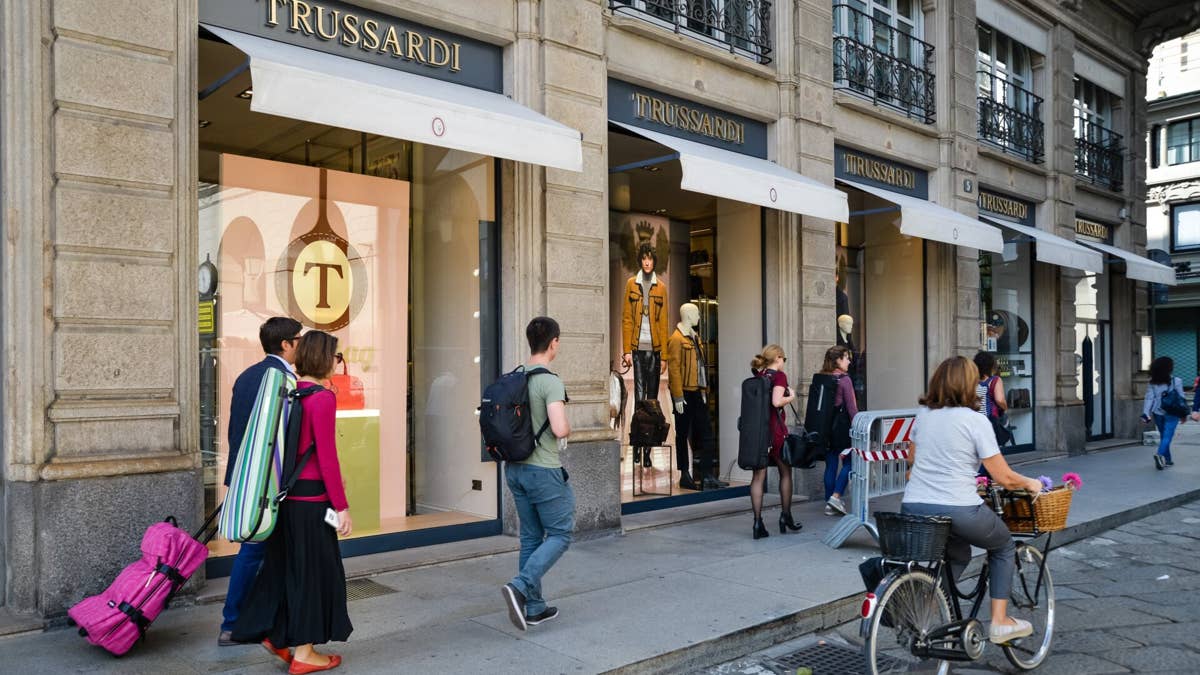
Italian fashion brand Trussardi has officially exited the Russian market as of early April 2026, closing its remaining business units in the country, Caliber.Az reported.
This final step follows a phased withdrawal strategy. The company had already shuttered all physical retail locations by the third quarter of 2025, while the legal closure of its Russian operating entity, T.R.S. Distribution LLC, was completed the same year.
At the start of 2025, around 10 stores were still operating across the country, and tentative plans were underway to open a new location in Moscow. However, those expansion efforts were ultimately abandoned, as reported by AzerNews.
The company initially announced plans to cease active operations in 2022 in response to the Russo-Ukrainian War, gradually scaling back its presence over the following years.
Trussardi’s direct retail footprint in Russia dates back to November 2016, when it opened its first boutique in Moscow’s GUM department store. Prior to that, the brand had already established a presence through wholesale partnerships and affiliated retail channels.
What is Trussardi?
Founded in 1911, Trussardi is an Italian fashion house known for its leather goods and ready-to-wear collections. The company remained family-owned for over a century before being acquired by the Miroglio Group in March 2024.
The acquisition followed an unsuccessful turnaround attempt led by investment firm QuattroR, which had obtained a 60% stake in 2019 with plans to relaunch the brand.
In the years leading up to the sale, Trussardi faced mounting financial pressure. Annual revenues had declined to approximately €80 million, while debt reached about €50 million, according to The Business of Fashion. The acquisition by Miroglio marked a critical step in restructuring efforts aimed at stabilizing the brand.
Miroglio remains a significantly large player, with projected 2023 revenues of €550 million and an EBITDA margin of around 10%, according to Luxury Tribune.
Shutterstock
Global brands continue exiting the Russian market
Trussardi’s exit is part of a wider pattern of international companies reducing or fully ending operations in Russia following geopolitical tensions tied to the Ukraine conflict.
Notable examples include:
- IKEA: Halted operations in 2022 and fully exited by November 2024, according to Kyiv Post.
- H&M: Exited the market in late 2022, according to H&M Group.
- Inditex: Temporarily closed stores and suspended online operations in March 2022, according to the Wall Street Journal.
- Moncler: Suspended operations in 2022 and exited completely in October 2024, according to B4Ukraine.
- Hugo Boss: Finalized its exit in August 2024, according to Reuters.
According to the Yale School of Management, more than 1,500 companies had scaled back or ceased operations in Russia by 2024.
While many exits occurred in the early stages of the conflict, conditions have since become more restrictive. Regulatory hurdles and state-imposed requirements have made asset sales increasingly difficult, leaving some companies unable to fully disengage.
Deal activity has slowed significantly. According to the local news outlet Russia.Post, exit transactions dropped to just 23 in 2025, representing roughly 8% of total mergers and acquisitions volume, down from 202 of 682 deals in 2022, or about 30%. The number has steadily declined each year, falling to 111 in 2023 and 63 in 2024, highlighting the growing complexity of leaving the market.
Analysts expect the pace of corporate exits to slow significantly in the coming years as regulatory and financial barriers continue to increase.
Retail faces structural challenges beyond geopolitics
The withdrawal from Russia also comes amid broader structural challenges facing the global retail sector.
Brick-and-mortar retail continues to undergo significant transformation. According to CoreSight Research, store closures increased by 67% in 2025 compared to the previous year, reflecting shifting consumer behavior and rising operational costs.
Meanwhile, McKinsey & Company’s State of Fashion 2026 Report forecasts low-single-digit growth for the global fashion industry, citing ongoing macroeconomic instability, tariff pressures, and value-conscious consumer behavior.
E-commerce remains a key growth driver. U.S. online retail spending reached $1.34 trillion in 2024 and is projected to surpass $2.5 trillion in 2030, according to Capital One Shopping.
More coverage on store closures:
- Dunkin’ could exit an entire market in 2026 after 14 years
- Nordstrom brings back fashion brand after 25-year U.S. shutdown
- 12-year-old beauty brand closing nearly all stores
- 72-year-old mall retailer to close more stores in 2026
However, physical stores continue to dominate the overall retail market. Global retail sales reached approximately $18.9 trillion in 2025, with around $14.4 trillion still generated through physical locations, according to Euromonitor research gathered by EY.
“It’s clear that the physical store still plays an important role,” said EY Retail Analysts Malin Andrée and Jon Copestake. “Not only do stores have plenty of runway left in delivering revenue, but they also have opportunities to drive new growth and alternative revenue streams and, by working in tandem with digital channels, they can maximize returns on investment.”
Trussardi part of a changing global retail landscape
Trussardi’s exit highlights a mix of forces reshaping the retail landscape, including geopolitical risk, financial restructuring, and evolving consumer behavior.
Mid-size luxury brands, in particular, face heightened exposure. Unlike global conglomerates, they often lack the scale to absorb prolonged disruption while remaining heavily reliant on international markets for growth.
As a result, the challenge for legacy brands is no longer just market expansion; it is strategic focus, operational resilience, and the ability to adapt in an increasingly fragmented and uncertain global environment.
Related: New federal law could force thousands of stores to close
