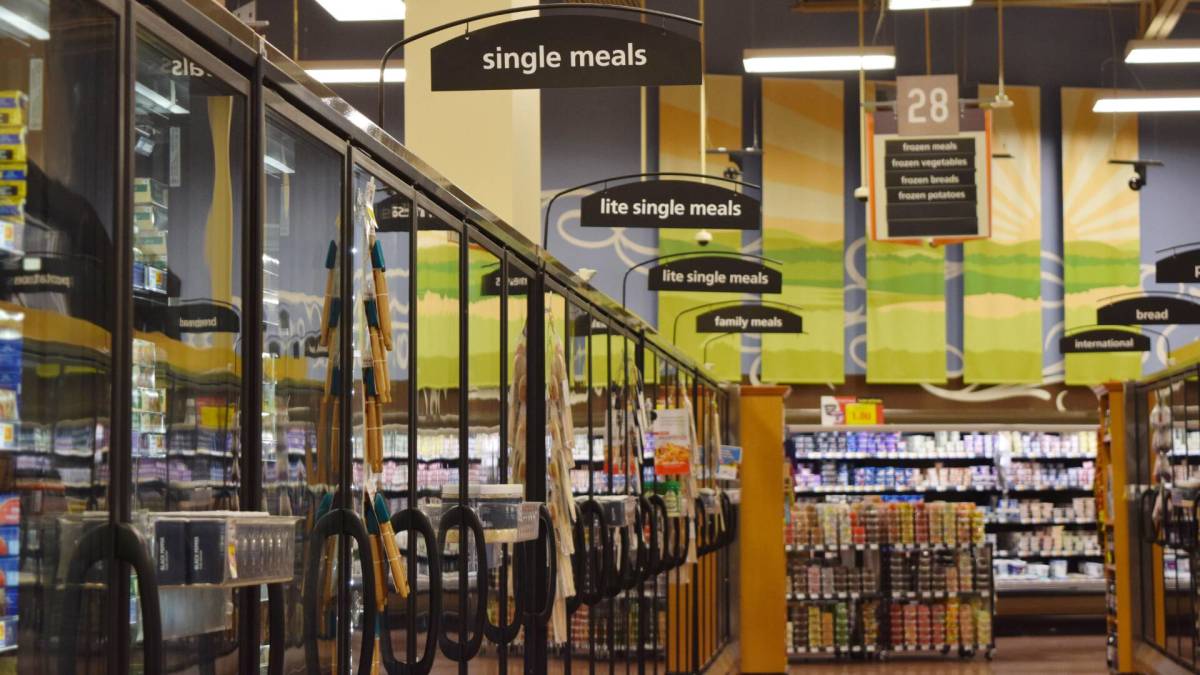
Kroger, which operates a vast network of regional supermarkets such as Fred Meyer, Ralphs, and Smith’s, is seeing customers change how they shop in stores. This shift in customer behavior threatens future sales, which is raising concerns. In response, the company’s CEO is promising major changes to keep customers from fleeing.
In Kroger’s latest earnings report, it revealed that its identical sales (excluding fuel) rose only 2.4% year over year in the fourth quarter of 2025. For the full year, Kroger generated $1.8 billion in operating profit, which is significantly lower than the $3.8 million it earned in 2024.
Also, a recent Placer.ai report found that while foot traffic at Kroger’s stores spiked by 2.3% year over year during the quarter, the average amount of time customers are spending at these locations decreased by about 2% in October, 3.5% in November, and 3% in December. These declines suggest that customers are purchasing less during each visit.
“These patterns reflect larger trends seen across the grocery space, where traffic growth has been largely driven by an increase in shorter trips as shoppers split their lists across retailers and make more targeted visits based on price, promotion, or specific product needs,” wrote Shira Petrack, head of content at Placer.ai, in an analysis.
Shoppers adjust spending as high prices take a toll
During an earnings call on March 5, Ronald Sargent, who was Kroger’s interim CEO in 2025, said the company saw sales growth across categories such as pharmacy, e-commerce, and grocery, including fresh food and private-label brands. However, customers continued to spend with caution during the quarter.
“Customers remained focused on value in the fourth quarter, which was consistent with the trends that we’ve seen throughout the year,” said Sargent.
In recent months, consumer sentiment has dropped as Americans face economic pressures such as inflation, tariffs, and uncertainty in the U.S. housing market. In February this year, consumer sentiment declined 12.5% year over year, according to recent data from the University of Michigan.
Jennifer G. Lang / Shutterstock
“About 46% of consumers spontaneously mentioned high prices eroding their personal finances; readings have exceeded 40% for seven months in a row,” said University of Michigan Surveys of Consumers Director Joanne Hsu in a statement. “Sentiment is about 13% below a year ago and 21% below January 2025.”
Last year, to better appeal to frugal shoppers, Kroger began cutting costs across its organization, including layoffs and store closures, to reinvest those savings in lower prices in its stores.
It also added expanded store hours, ramped up discounts, and improved checkout speeds, changes Sargent said have “contributed to positive trends in customer satisfaction.”
Kroger’s new CEO hopes key changes will retain customers
As consumer sentiment remains challenged, Kroger officially appointed former Walmart U.S. executive Greg Foran as its new CEO on Feb. 9. During the company’s earnings call, Foran emphasized that Kroger needs to double down on providing lower prices, which he plans to focus on as CEO.
“We need to grow sales faster, and in my experience, that comes down to giving customers a compelling reason to shop with you by offering great value, great products, and a great experience,” said Foran. “Price is an important part of that equation. Customers need to trust that they’re getting a fair deal every time they walk into our stores.”
He said that he plans to keep pushing this initiative by continuing to pull unproductive costs out of the business, modernizing workflow, investing in everyday value, sharpening promotions and making sure customers can see and feel the difference in stores.
Related: Kroger CEO has a harsh solution to rising prices in stores
“The savings we generate will be reinvested directly into lower prices and better service for our customers,” said Foran. “That’s how we will fund our growth. Customers want convenience and are increasingly shopping online to buy food. We have the assets to meet that demand, and e-commerce is a key focus area for us.”
Kroger shoppers should also expect to see a revamped loyalty rewards program and simplified offers following recent criticism.
“You know, one of the things consumers tell us is, ‘Hey, it’s just really complicated to figure out, you know, whether I’m getting the best price at Kroger,’ just because of the way some of our offers are structured,” said Kroger Chief Financial Officer David Kennerley during the call.
More Retail:
- Home Depot CEO raises alarm bells on consumer problem in stores
- Kroger quietly reduces a vital store service for customers
- Kroger adds generous offer for customers as grocery prices rise
“We’re also doing work to make sure that we structure our offers in a more simple way, so that they get good prices and they can understand them.”
In addition to focusing on improving value perception, Kroger is planning to spend about $3.8 billion to $4 billion on several investments, such as new store openings (while testing new in-store formats) and artificial intelligence tools to make it easier for customers to shop.
“This year, we’re introducing agentic AI shopping for our customers, which will help them discover items, build baskets, plan meals, and stay within budgets, all in a personalized way,” said Kennerley.
“We’re also investing in supply chain modernization with more automation and expanded capacity, and we’ll also continue investing in our remodels to ensure our stores deliver a consistently strong experience.”
Kroger makes bold prediction as Americans struggle financially
As these changes roll out, Kroger expects its identical sales (without fuel) in fiscal year 2026 to increase by 1% to 2%. Kennerley said that the company expects sales to land “in near the low end of our full year range, driven primarily by continued egg deflation.”
Kroger’s increased focus on affordability comes as many Americans struggle to manage spending on groceries and household essentials amid rising prices and economic uncertainty, according to a recent LendingTree survey.
How Americans are feeling about their finances:
- Approximately 60% of Americans said their financial situation at the start of 2026 is the same orworse than it was at the beginning of 2025.
- In 2025, 87% said they struggled to manage their spending.
- About 26% said that rising prices and inflation made managing finances most difficult that year.
- Another 15% cited unexpected expenses, and 11% blamed changes in income or job situation.
- Across all spending categories, Americans struggled most to afford groceries and household essentials amid higher prices.
- To improve their financial situation, 48% plan to save more this year, while 35% aim to reduce debt and 34% hope to boost their income.
Source: LendingTree
Groceries are putting the most pressure on households because it’s a category that can’t be fully cut out of the picture, said LendingTree Chief Consumer Finance Analyst Matt Schulz in a statement.
“Yes, you can do things to keep your costs down, including couponing, shopping around, leaning on generics or store brands and so on, but you can’t just cut groceries out of your budget,” he said. “When those prices rise, you have to adjust accordingly. With so many people on a tight budget, that’s a major challenge.”
Related: Kroger quietly reduces a vital store service for customers
