The fear of losing legacy brands is increasingly becoming a reality as even well-known retailers struggle to adapt to shifting consumer preferences, rising operating costs, e-commerce growth, and intensifying competition.
Many longstanding companies that once dominated shopping malls are now suffering mass closures or disappearing entirely, proving that nostalgia and decades of brand history are no longer an advantage in today’s retail landscape.
Now, one of America’s most recognizable outdoor apparel brands is joining the list.
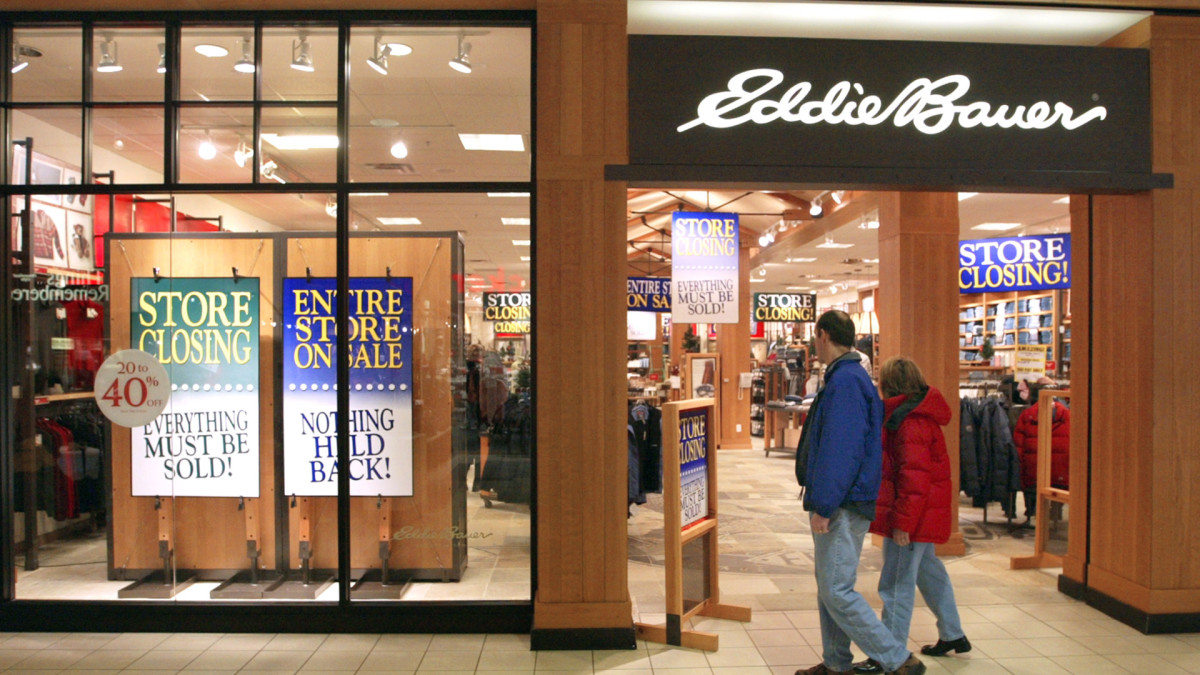
After 106 years in business, Eddie Bauer will permanently close all its physical retail stores following a failed attempt to sell its store portfolio during its Chapter 11 bankruptcy proceedings.
Eddie Bauer is permanently closing 174 stores
Eddie Bauer LLC has canceled a planned auction for its remaining stores, which was scheduled for March 6, 2026, after receiving no qualified bids before the March 3 bid deadline, according to bankruptcy court filings.
With no buyer secured, the company will continue liquidation sales across all its brick-and-mortar locations unless a last-minute offer emerges that maximizes value for creditors during the remainder of the proceedings.
Earlier in the bankruptcy process, Eddie Bauer LLC attempted to sell its entire North America retail footprint.
The company hired real estate brokerage firm RCS Real Estate Advisors to market around 174 store leases, including 150 locations across 40 U.S. states and 24 locations across six Canadian provinces, according to the announcement.
In total, the portfolio represents more than 1.08 million square feet of retail space, with stores averaging about 6,300 square feet each. The locations include malls, lifestyle centers, and high-traffic retail corridors.
Tim Boyle/Getty Images
Eddie Bauer’s century-old history
Founded in 1920 in Seattle, Washington, Eddie Bauer became one of the most recognizable outdoor apparel brands in the U.S.
The retailer expanded rapidly during the late 1990s and early 2000s. At its peak in 2001, the company operated nearly 600 stores, according to data from CoStar Group Inc.
Although the brand remains well known, its retail operations have struggled in recent years amid declining mall traffic and growing competition from rival outdoor brands.
Today, the Eddie Bauer brand and intellectual property are owned by Authentic Brands Group and SPARC Group LLC, while day-to-day physical store operations are managed by Catalyst Brands, which includes Eddie Bauer LLC among its operating entities.
What customers need to know before stores close
- Gift cards: Will be accepted in stores only through March 12, 2026, but cannot be redeemed online. After that date, gift cards will no longer be honored.
- Rewards points: Can be used in stores through March 12.
- Refunds and exchanges: All sales are final, and stores will not accept returns or exchanges.
- Physical stores: All 174 physical locations are expected to close.
- Eddie Bauer brand: Despite the store closures, the brand itself will continue. Authentic Brands Group can still license the brand to other retailers or operators.
All the information above was stated in the official court documents.
Eddie Bauer operator files for Chapter 11 bankruptcy
Eddie Bauer LLC filed for Chapter 11 bankruptcy protection on February 9, 2026, in the U.S. Bankruptcy Court for the District of New Jersey.
According to the court documents reviewed by The Street, the company reported more than $1 billion in debt, citing declining sales, supply chain disruptions, inflation, tariff uncertainty, and other retail industry headwinds.
As part of the bankruptcy process, the company reached a restructuring agreement with its secured lenders, allowing it to begin liquidation sales while seeking a buyer for its North American retail business.
If no buyer emerged, a full wind-down of Eddie Bauer’s U.S. and Canada stores would be completed by April 30, 2026.
The bankruptcy does not affect the brand’s e-commerce operations, wholesale partnerships, or international stores, which are managed by separate licensees.
Eddie Bauer has filed for bankruptcy before
This is not the first time Eddie Bauer has encountered financial distress.
2003 Spiegel Inc. bankruptcy
Eddie Bauer’s former parent company, Spiegel Inc., filed for Chapter 11 bankruptcy protection in March 2003, leading to the closure of more than 80 underperforming stores.
Following a restructuring, Eddie Bauer emerged as an independent company, Eddie Bauer Holdings, Inc., in June 2005, according to the SEC filings.
2009 Eddie Bauer Holdings Inc. bankruptcy
Eddie Bauer Holdings Inc. filed for Chapter 11 bankruptcy again during the recession, citing heavy debt and declining sales.
A month later, private equity firm Golden Gate Capital acquired the retailer out of bankruptcy for around $286 million, according to a company press release.
Analysts say Eddie Bauer lost its competitive edge
Some retail analysts say the brand has gradually lost its competitive edge.
GlobalData Managing Director Neil Saunders has criticized the company’s in-store experience and lack of differentiation.
“I really struggle to understand what the point of difference is,” wrote Saunders on RetailWire. “Stores are crammed full of product, are hard to shop, and don’t provide anywhere near enough inspiration.”
Benedict Enterprises LLC Retail Consultant Scott Benedict said the company’s bankruptcy highlights how quickly established brands can lose relevance.
“Eddie Bauer’s exit from physical retail and its subsequent bankruptcy underscore timeless lessons about relevance, investment discipline, and the unforgiving pace of change in apparel retail,” wrote Benedict. “Even well-known heritage brands can quickly lose ground when their value proposition no longer aligns with what today’s consumers want, where they shop, and how they engage.”
CEO and Strategic Board Advisor Mohamed Amer added that brand ownership structures can sometimes prioritize financial returns over long-term brand development.
“The question is whether retail investors will finally admit that brand licenses without brand stewardship are expensive ways to disappoint customers while generating returns for portfolio operators,” wrote Amer.
Store closures reflect wider retail industry struggles
The shutdown of Eddie Bauer stores reflects a broader trend across the retail sector as traditional mall-based brands struggle to compete with e-commerce and changing consumer habits.
More Retail Store Closures:
- 153-year-old bookstore chain confirms more closures in 2026
- 53-year-old retail chain explores selling entire business
- 159-year-old retail giant announces more store closures
Online shopping continues to expand rapidly. U.S. e-commerce spending reached $1.34 trillion in 2024 and is projected to surpass $2.5 trillion in 2030, according to Capital One Shopping‘s Online Shopping Statistics 2026 data.
U.S. online sales accounted for 22.3% of global e-commerce spending in 2024, up nearly 1.5% from the year prior.
Several other well-known chains have filed for bankruptcy and announced mass store closures in recent years.
Other retail chains facing bankruptcy and closures
- Claire’s: Filed for Chapter 11 bankruptcy for the second time in August 2025 and plans to close nearly 300 stores, according to The Street.
- Forever 21: Filed for Chapter 11 bankruptcy again in March 2025 and liquidated all its U.S. stores ahead of closures, as reported by The Street.
- Francesca’s: Francesca’s filed for Chapter 11 bankruptcy a second time in January 2026 and liquidated all its remaining 457 stores to prepare for closures, per The Street.
Related: Apple closes all stores in fast-growing market
