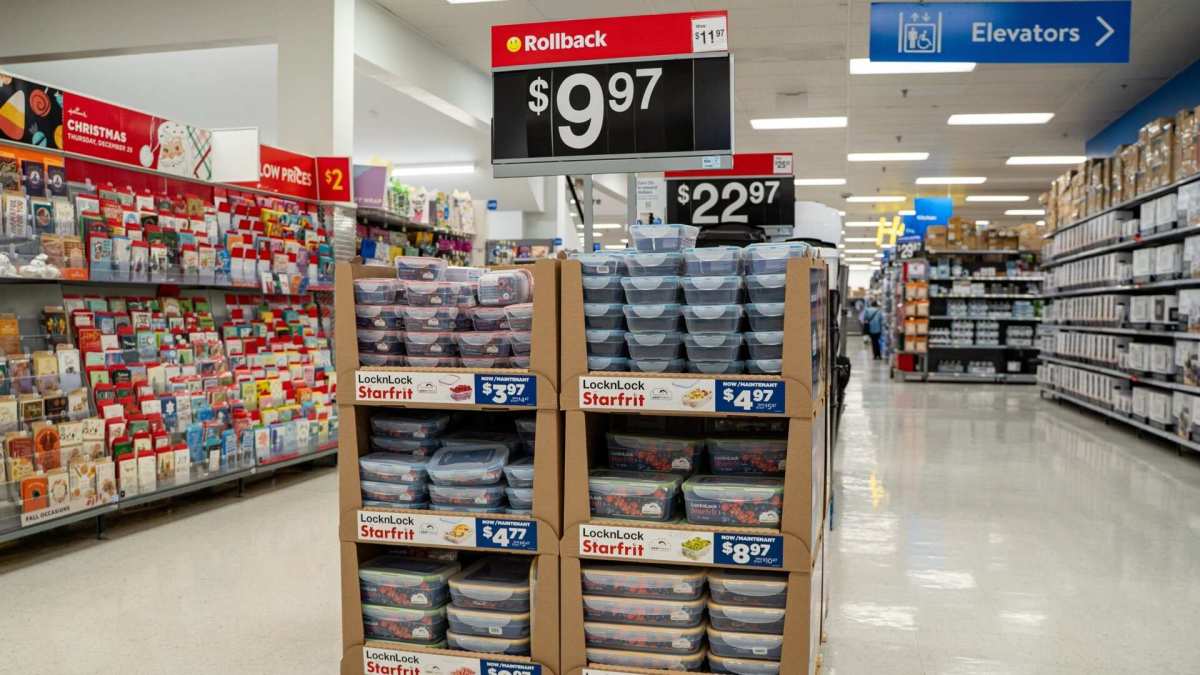
At its best, technology should make shopping in a store easier while freeing up human workers for customer service and other tasks that people do better than automation or artificial intelligence (AI).
Walmart has been pretty insistent that its use of AI will be a benefit for customers and employees.
“Being people-led and tech-powered helps our associates to find better ways to serve customers and members with our growing assortment, faster delivery speeds, and experiences they love. […]AI is helping us create great customer solutions, reduce friction, simplify decision-making, and [manage] inventory,” Walmart CEO John Furner shared during the chain’s fourth-quarter earnings call.
Aside from helping customers, technology can also be used in ways that primarily benefit the company. Uber’s surge pricing, for example, where rides cost more during peak hours, may be good for the ride-sharing service, and perhaps its drivers, but customers lose out.
When Wendy’s hinted at potentially using dynamic or surge pricing, the backlash was severe, and the company quickly abandoned the plan. Now, Walmart is implementing technology in all its stores that would make using a dynamic pricing model — where the price of items changes quickly based on demand — much easier.
Walmart rolls out digital pricing
Digital shelf labels, or DSLs, allow Walmart to change or set prices on items without a worker physically having to change the price tag. That’s a huge saving on labor hours, according to the retailer.
Walmart has been aggressive in pointing out the positives of this technology and its impact on the company’s employees.
“Today, roughly 2,300 Walmart U.S. locations are already using digital shelf labels, and we expect this technology to be chain-wide within the next year. For our associates, that expansion can’t come soon enough,” Walmart shared in a press release.
More Retail:
- Costco sees major shift in member behavior
- Retail chain shuts all locations as legal changes hit industry
- Lululemon struggles to reverse concerning customer behavior
The chain laid out the labor argument.
“Walmart stores carry tens of thousands of items, and every single one needs to have a clear, accurate shelf price. Between new inventory, Rollbacks and markdowns, pricing updates stack up fast and can take hours, if not days, to complete,” it shared.
What the chain does not mention in its press release is that DSLs would also make it much easier for the chain to implement dynamic pricing.
Walmart says it won’t use dynamic pricing
Walmart has made it clear that the change to DSLs does not mean the beginning of the implementation of dynamic pricing.
“It is absolutely not going to be ‘one hour it is this price, and the next hour it is not,'” Greg Cathey, senior vice president of transformation and innovation at Walmart, said in a statement to CBS News.
But there’s nothing stopping the chain from speeding up how it adjusts prices, which could mean raising or lowering prices faster than it previously did.
“I do not think we will see Walmart introduce dynamic pricing anytime soon,” Neil Saunders, managing director of GlobalData’s retail division, told CBS. “A lot of shoppers use Walmart because it has low prices, and Walmart has worked very hard to establish trust with the customer.”
Walmart stands by its low prices
“The DSL program is not designed for dynamic pricing,” Walmart spokesperson Cristina Rodrigues told Retail Brew in a statement. “Walmart adheres to Everyday Low Price. The DSLs make it easier for associates to add pricing on shelves for new products, and update pricing related to planned Rollback and Final Clearance products.”
Many states have laws that prevent chains from “price gouging” during a storm, a product shortage, or another emergency.
“Price gouging refers to when retailers and others take advantage of spikes in demand by charging exorbitant prices for necessities, often after a natural disaster or other state of emergency,” the National Conference of State Legislatures shared on its website.
Early data show that consumers have actually benefited from the technology.
“ESLs eliminate manual price changes, reduce operational costs by up to 30%, and enable dynamic pricing strategies that respond to demand fluctuations, competitor actions, and inventory levels. A 2024 study found that adoption led to a 15% increase in discount frequency without significant price surges, suggesting that retailers are using the technology to enhance value for consumers,” AInvest reported.
Shutterstock
Consumers are worried about automated pricing
In a Gartner Consumer Community survey of U.S. consumers conducted in October 2024, 80% agreed that brands with consistent pricing are more trustworthy, and 42% would be willing to spend more on a product if consistent pricing were guaranteed.
“Seventy-nine percent of 1,532 respondents to Gartner’s 2024 Cultural Attitudes and Behavior Survey conducted in September and October 2024 reported experiencing an unexpected price scenario in the last year, ranging from surge pricing to hidden fees to unforeseen rate hikes,” Gartner shared.
Consumers remain wary of retailers.
“While inflation may have eased, suspicion and frustration have not — and these negative sentiments are fueling distrust and price paranoia,” said Kate Muhl, VP analyst in the Gartner Marketing practice. “As a result, consumer loyalty is diminished, and the brand relationship hardens into something more adversarial.”
Consumers, it should be noted, broadly oppose the use of dynamic pricing.
“Over two-thirds (68%) of U.S. adults somewhat or strongly agree that dynamic pricing (the practice of raising prices when demand is high and dropping them when demand is low) is price gouging,” according to a March 2024 CivicScience survey.
Related: Major national grocery chain closes 36 underperforming stores
