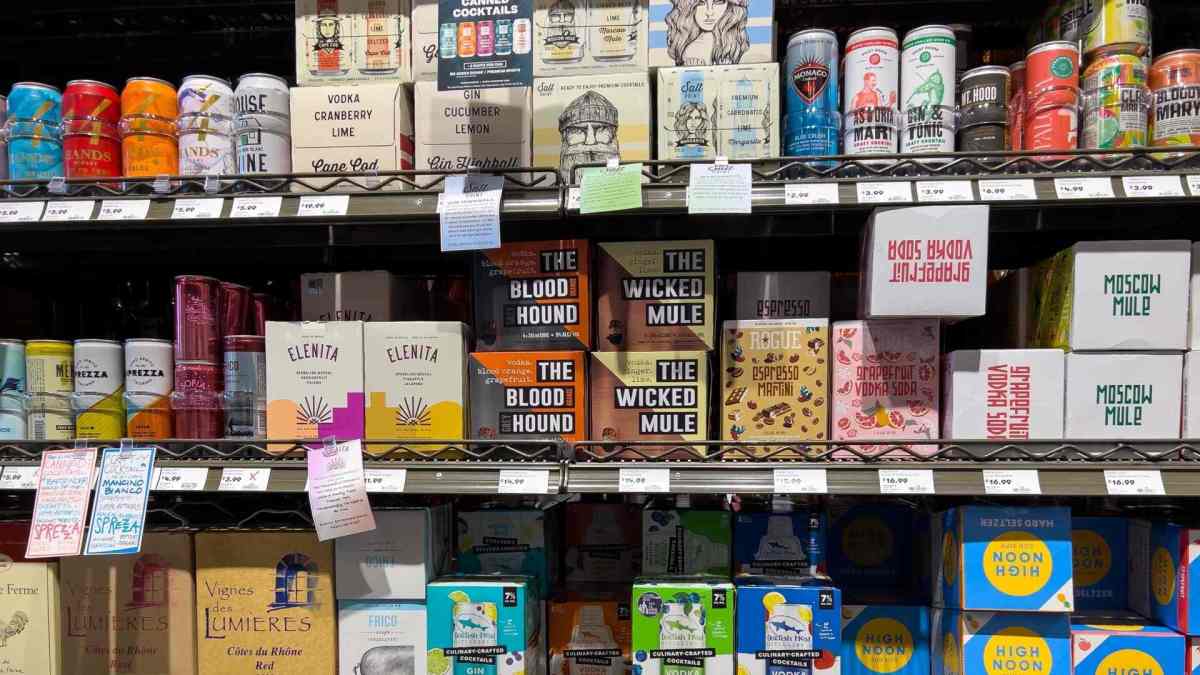
Hard seltzer went from being a novelty to becoming a massive part of the overall alcohol market in the United States.
“The United States Hard Seltzer Market was valued at $1.93 billion in 2024 and is anticipated to grow to $3.48 billion by 2030 with a CAGR (compound annual growth rate) of 10.37% during the forecast period,” according to data from Tech-Sci Research.
It’s a market that has grown steadily, which has led to a large number of players entering the space.
“One of the most pressing challenges in the U.S. hard seltzer market is market saturation. Following the rapid rise and massive success of early brands like White Claw and Truly, a flood of new entrants — including major alcohol companies, craft brewers, and private labels — have rushed into the space. While this influx has driven innovation and expanded consumer choice, it has also led to fierce competition and crowded retail shelves,” the research company added.
That has led to a lot of failures in the hard seltzer market, and Florida’s Palm Folly has become the latest company to not make it, filing for Chapter 7 bankruptcy protection, according to court filings on PacerMonitor.
Palm Folly headed to bankruptcy liquidation
As the once-booming hard seltzer category matures, smaller brands are increasingly struggling to compete with larger beverage companies and crowded store shelves.
For consumers, this means fewer new hard seltzer options on shelves, and for investors, it’s a warning that not every trendy beverage brand can survive.
Palm Folly tried to tap into consumer demand for healthier alcoholic beverages.
“At Palm Folly, we believe hard seltzer should be crafted — not manufactured. Ours is brewed like beer using pounds of real fruit purées, with no chemicals and nothing artificial. Low-calorie, gluten-free, and ridiculously good, we’re obsessed with creating a hard seltzer that’s simply better than anything else on the market,” the company shared on its website.
That website makes no mention of the company’s Chapter 7 bankruptcy, which was filed on March 1, according to Inforuptcy.
The brewery has listed total assets to the tune of $65,423, while total liabilities stood at $1,205,919.44. Non-priority creditors have an unsecured claim of about 94.5% of the total liabilities, equaling nearly $1.14 million, according to the filing.
More Bankruptcy:
- Key auto parts and services company files Chapter 11 bankruptcy
- Key travel brand files for Chapter 11 bankruptcy
- Self-driving-car company files for Chapter 11 bankruptcy protection
“The company has listed Nashville-based Holcar Properties LLC as the largest non-priority creditor with an unsecured commercial lease claim of $1.12 million. At the same time, the firm owes $18,743.46 against an American Express credit card,” WhatNow reported.
Palm Folly earned gross revenue of $272,563.49 over the 12 months from January 01, 2025, to December 31, 2025. The revenue was 18% lower than the previous year’s figure of $332,226.71, the news website added.
Shutterstock
Palm Folly Chapter 7 bankruptcy quick facts
- Palm Folly Hard Seltzer LLC filed for Chapter 7 bankruptcy on March 1, 2026 in the U.S. Bankruptcy Court for the Northern District of Florida.
- The case is No. 26-30196-KKS and is assigned to Judge Karen K. Specie.
- The filing is a Chapter 7 liquidation, meaning the company plans to sell assets to repay creditors rather than reorganize.
- Estimated assets: about $65,423.
- Estimated liabilities: about $1.21 million.
- The bankruptcy petition lists 1–49 estimated creditors.
- A 341 meeting of creditors is scheduled for April 9, 2026.
- The filing indicates it is a “no-asset” case, meaning unsecured creditors may receive little or no recovery after administrative expenses.
Source: Inforuptcy
Hard seltzer market caters to growing trends
“The hard seltzer market is fueled by consumer demand for healthier, low-calorie, low-sugar alternatives to alcohol. While North America is still leading the way with substantial consumption by millennials and Gen Z consumers, and Europe, Asia-Pacific, and Latin America are emerging as developing markets as wellness and lifestyle trends continue to expand,” according to a research report from Skyquest.
While the market is growing, it has also become saturated.
“Both market leaders and start-up brands typically enter the market with similar products, resulting in brand obsolescence and excessive overlap. When consumers encounter excessive offerings, we inevitably see price wars and weakened brand loyalty. The issue of oversaturation creates challenges for brand-new entrants and puts pressure on established leaders to continue innovating or lose their edge,” Skyquest added.
In addition, overall liquor sales in the U.S. have fallen.
“While total U.S. spirits sales edged down 2.2% in 2025, the spirits industry remains resilient, driven by innovative products that continue to spark consumer interest,” said Distilled Spirits Council CEO Chris Swonger. “Against a challenging backdrop of weakening consumer confidence and persistent economic pressures, American adults continue to choose distilled spirits, with ready-to-drink cocktails standing out as a clear favorite.”
Related: Struggling brewery files Chapter 11 bankruptcy, closes taprooms
