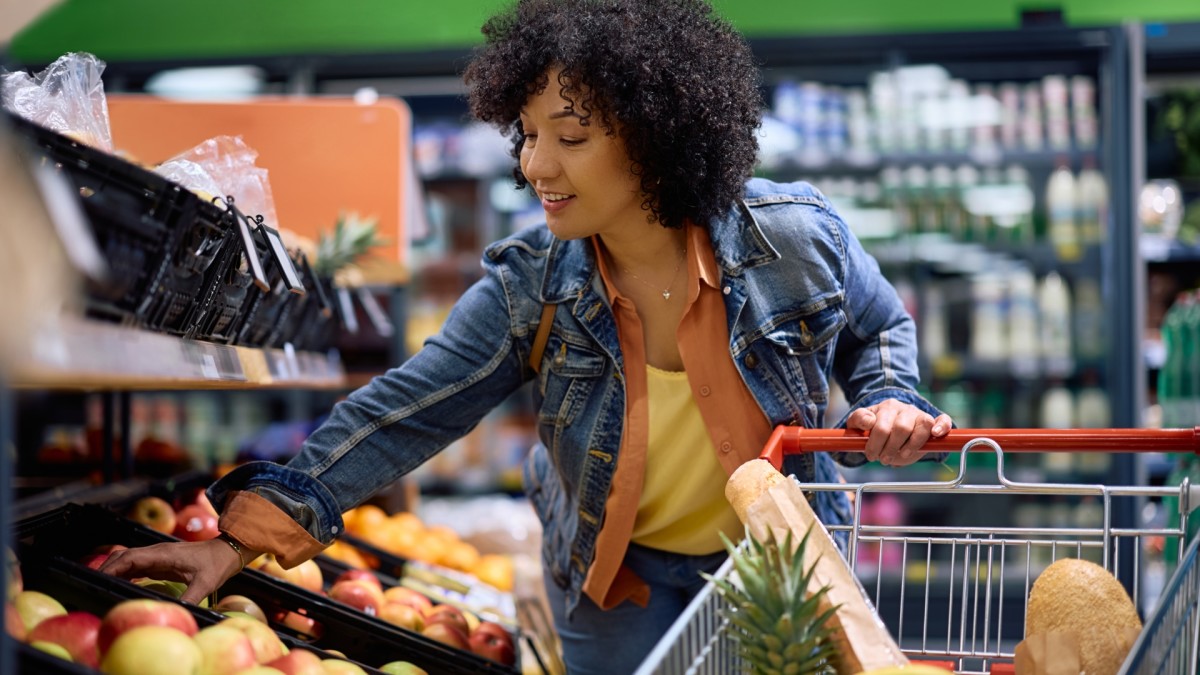
For decades, small businesses have shaped communities’ identities, building their distinct character. Independent grocery stores, with local produce and personalized service, offered a sense of connection that national chains often could not replicate.
Today, however, that landscape is changing. Independent grocers are closing at a rapid pace and being taken over by larger retailers aiming to expand their reach.
Retail giants such as Walmart, Costco, Kroger, and Albertsons continue to dominate the industry with their recognizable names, massive footprints, broader product assortments, and aggressive pricing strategies, leaving independent operators with little choice but to sell or shut down.
The top four grocery retailers now account for 69% of U.S. grocery spending, with Walmart alone representing nearly 35% of the total, according to Farm Action.
This caused the market share of independent retailers to fall from 53% in 1982 to 22% by 2017, according to the Institute for Local Self-Reliance.
Now, this national trend has reached the Appleby family. It is preparing to give up its only two grocery stores in a Pennsylvania community, where they have served as shoppers’ primary options for years.
The Giant Company will acquire two Pennsylvania grocery stores
The Giant Company has agreed to acquire Everett Foodliner and Saxton Market from the Appleby family in Bedford County, Pennsylvania, according to a company press release. While the financial terms of the deal were not disclosed, the transaction includes both the real estate and related grocery and fuel business assets.
Once the sale is complete, both stores will temporarily close for renovations beginning April 20, 2026, with plans to reopen later in the year. Details regarding exact amenities, hours, and reopening dates will be shared at a later date.
Giant’s acquired stores
- The Everett Foodliner: 250 West Main St., Everett, Pennsylvania
- The Saxton Market: 509 Main St., Saxton, Pennsylvania
“Expanding in existing markets is a key element of Giant’s strategic growth plan,” said The Giant Company President John Ruane in a statement. “We look forward to working closely with Bob and Joe on the transition, welcoming our new team members, and delivering value, freshness, and kindness to our new customers.”
Approximately 64 employees at the Everett Foodliner and 58 at the Saxton Market will be affected, according to the WARN notice filed February 20 and reviewed by TheStreet. All employees will have the opportunity to interview for positions with The Giant Company.
“While it was a difficult decision to make, we are pleased by the care GIANT has shown for our business, employees, and customers,” said Bob and Joe Appleby in a statement. “We know our family business is in good hands with Giant.”
Founded in 1923 and owned by Ahold Delhaize, The Giant Company operates 194 stores, 133 pharmacies, and 107 fuel stations under multiple banners, including Giant, Martin’s, and Giant Heirloom Market, across Pennsylvania, Maryland, Virginia, and West Virginia, according to the company’s website.
Shutterstock
Independent retailers face mounting pressures
The Appleby family store acquisitions reflect broader challenges facing independent grocers nationwide and highlight how regional chains are accelerating expansion into smaller communities as independent operators exit the industry.
Economic uncertainty, rising operational costs, shifting consumer habits, and intensifying competition from large-format and non-traditional retailers have made it increasingly difficult for independent operators to remain profitable, forcing many to downsize or consolidate their assets to survive.
In response, lawmakers have begun addressing industry concerns.
In late January, the U.S. House of Representatives passed H.R. 7148 and H.R. 7006, legislation to address challenges faced by independent community grocers and their customers in underserved areas.
The National Grocers Association has also urged the Federal Trade Commission to enforce existing competition laws, including the Robinson-Patman Act to ensure fair pricing and competitive conditions.
“Congress is sending a clear signal that competition matters for affordability,” said the National Grocers Association Chief Government Relations Officer Chris Jones in a press release. “The FTC already has the tools it needs to lower prices and restore balance in food, pharmacy, and retail markets.”
Store closures continue to reshape communities
Store closures remain ongoing and are significantly affecting independent businesses.
U.S. retailers are expected to close 7,900 stores in 2026, down 4.5% from 2025, while 5,500 locations are projected to open, up 4.4%, according to Coresight’s U.S. Store Tracker 2026 Outlook.
Although the pace of closures has slowed slightly, the net loss of physical stores continues to disproportionately impact lower-income and rural communities.
“For consumers, the fallout means fewer choices, diminished access to in-person shopping, and, in some cases, higher prices due to reduced competition,” said Approved Funding President and Chief Lending Officer Shmuel Shayowitz.
More Grocery Store Closures by Fernanda Tronco:
- 110-year-old grocery chain operator closes store after 40 years
- More grocery stores close, leaving customers with no options
- 113-year-old grocery chain quietly closes stores in 2026
Employment trends are also under pressure. Companies with fewer than 50 employees lost 120,000 jobs in November, according to the ADP National Employment Report.
“The labor market is not weak but it is weakening, and the first to crack is small establishments,” said ADP Chief Economist Nela Richardson on a conference call reported by NBC News.
Scott Moses, partner and head of the grocery, pharmacy, and restaurants advisory group at New York-based Solomon Partners, spoke about rising competition from non-traditional grocers, Supermarket News reported.
“For many years, I’ve been sounding the alarm about the rise of national/discount grocers— Walmart, Target, Costco, Amazon, Dollar General, Family Dollar, and Dollar Tree — and the existential threat that they pose to supermarket grocers, just as we’ve all seen over the last 20 years how department stores have been marginalized,” said Moses.
Related: Luxury giant to close more than 200 stores after sales drop
