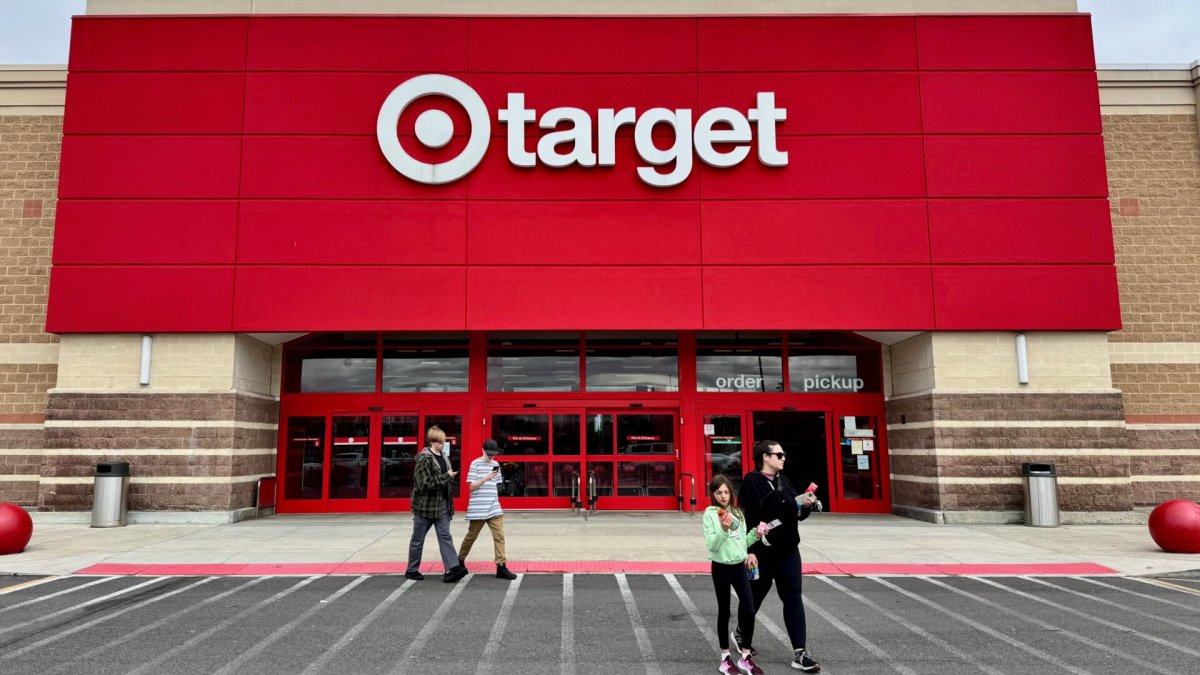
Target, which has almost 2,000 stores nationwide, has faced weak retail sales amid economic pressures, and recent controversies have further strained its reputation. To tackle these hurdles, the company is betting big on a key in-store expansion to re-engage shoppers.
In the third quarter of 2025, Target’s comparable store sales dropped by 3.8% year over year, according to its latest earnings report. Additionally, Placer.ai data showed that foot traffic at Target stores declined by 2.7% during the quarter, compared to the same time period in 2024.
The decrease in demand comes after Target faced backlash for cutting back its diversity, equity and inclusion policies, which sparked several boycotts from consumers who disagreed with the decision.
Target has also been struggling to attract price-conscious shoppers in its stores amid inflation and higher living costs.
During an earnings call in November, Target Chief Commercial Officer Richard Gomez said that the company saw “continued softness in discretionary categories like home and apparel.”
“Guests are choiceful, stretching budgets and prioritizing value,” said Gomez. “They’re spending where it matters most, especially in food, essentials and beauty, while looking for trend-right deals in discretionary categories.”
Consumers have indeed been growing more cautious about their discretionary spending, a trend that isn’t expected to disappear anytime soon.
A survey from McKinsey & Company in December found that 57% of consumers are cutting back nonessential spending. Specifically, 43% plan to decrease home decor spending, while 38% plan to spend less on apparel.
Shutterstock
Target bets on a bold in-store change
Earlier this month, Michael Fiddelke officially became Target’s new CEO, and in a memo, he said the company has “real work to do” to earn back trust from customers. One of the priorities he vowed to push includes “leading with merchandising authority” by focusing on “design, style and value.”
Target appears to be moving forward with this initiative as it is expanding its partnership with Levi’s, the top jeans brand in the U.S., according to a recent press release.
This will result in Levi’s denim merchandise being introduced to an additional 150 Target stores by the end of this year. After this expansion, more than 1,000 total Target locations nationwide will sell Levi’s denim.
By Spring, Target plans to grow its Levi’s women’s assortment by almost 20% year over year.
Related: Target makes drastic workforce shift to fix customer experience
Target states that the collection will feature “best sellers with new trend-driven pieces,” such as “relaxed and looser leg silhouettes, updated washes and added lifestyle pieces like tops and overalls for easy, head-to-toe outfitting.” Most styles will also be priced under $60.
“Levi’s is the #1 denim brand in the world and our evolution into a head-to-toe denim lifestyle brand is resonating with Target guests,” said Heidi Manes, managing director of Levi’s U.S. and Canada, in the press release. “Our expansion with Target reflects the momentum behind our lifestyle assortment, the strength of our partnership and our commitment to reaching Levi’s fans wherever they choose to shop.”
Target and Levi’s ride a rising consumer trend
This expansion will not only benefit Target’s sales but also Levi’s, which has been struggling with sluggish revenue.
Levi’s revealed in its fourth-quarter earnings report for 2025 that its net revenues in the U.S. decreased by 7% year over year. The decline comes after it implemented price increases last year due to tariffs, a move it plans to repeat this year.
Despite the revenue dip, Levi’s direct-to-consumer business in the U.S. grew by 6% during the quarter.
During an earnings call last month, Levi’s CEO Michelle Gass said the company is seeing “strong demand” for its tops such as sweaters, wovens and outerwear. Specific styles in bottoms are also gaining popularity.
More Retail:
- Lowe’s rolls out free offers for customers amid challenges
- Home Depot and Lowe’s quietly gain new rival
- Kroger adds generous offer for customers as grocery prices rise
“Within our bottoms business, we are showcasing our most diversified portfolio yet with everything from our core icon to our innovative fashion fits and nondenim bottoms, all delivering growth,” said Gass. “While skinny and straight fits remain popular, loose and baggy styles continue to accelerate.”
Jeans have seen a spike in consumer demand worldwide, a trend that Target and Levi’s appear to be leaning into further with their expanded partnership.
A survey from Cotton Incorporated last year found that 48% of consumers are wearing jeans more regularly than ever. Also, 45% prefer to purchase jeans from physical stores rather than online.
“Thanks to our comprehensive international consumer survey data, we can confirm that global consumers are increasingly choosing to wear denim jeans,” said Andrea Samber, director of brand partnerships for Cotton Incorporated, in a statement. “Data demonstrates the majority of consumers love their cotton denim jeans for comfort, quality and durability.”
Target battles a major shift in consumer behavior
Target’s latest move to strengthen its merchandise authority also comes as many retailers are fighting to compete with the growing trend of thrift shopping.
Many consumers across the country are opting to thrift their clothing and other merchandise, mainly to save money, according to a recent survey from Talker Research, which was commissioned by Mercari.
Why Americans are turning to thrift shopping:
- About 66% of Americans regularly shop at thrift stores to stretch their budgets.
- Nearly 1 in 6 thrift shop weekly.
- Secondhand clothing is the most popular thrift category, with 71% buying pre-owned apparel.
- Roughly 45% of Americans thrift home decor, making it the second-most-popularcategory, followed by books (40%) and home goods (39%).
- While 51% say they thrift shop because they enjoy scoring a deal, 42% like hunting for unique, one-of-a-kind items, and 28% search for collectibles.
Source:Talker Research
“As the data shows, thrifting is multidimensional,” said Jeff LeBeau, vice president of growth at Mercari, in a statement. “It’s something people are doing to spend responsibility these days, but it’s also a hobby for many. Not only is it an affordable option for shoppers due to financial constraints, but thrifters also just thrift for the fun of it, and to find unique deals.”
Related: Kroger quietly reduces a vital store service for customers
